Introduction
The latest U.S. GDP results are not just “good news”, it’s a signal that the next phase of the business cycle is taking shape. The more instructive indicator is private fixed investment: where organizations are placing long-lived bets in anticipation of future demand.
For real estate owners, operators and investors managing distributed real estate portfolios, this moment matters. The next cycle will not reward incremental optimization or isolated initiatives. It will reward portfolios where operating models spanning facilities, asset management, and operating capabilities are intentionally designed to scale ahead of demand.
Those who act now will be positioned not merely to participate in the next cycle, but to lead in fully capturing its value. The result is not just resilience, but productivity. By designing operating models that anticipate growth rather than chase it, organizations can convert volatility into advantage and capital investment into sustained performance and real growth.
Market Insights
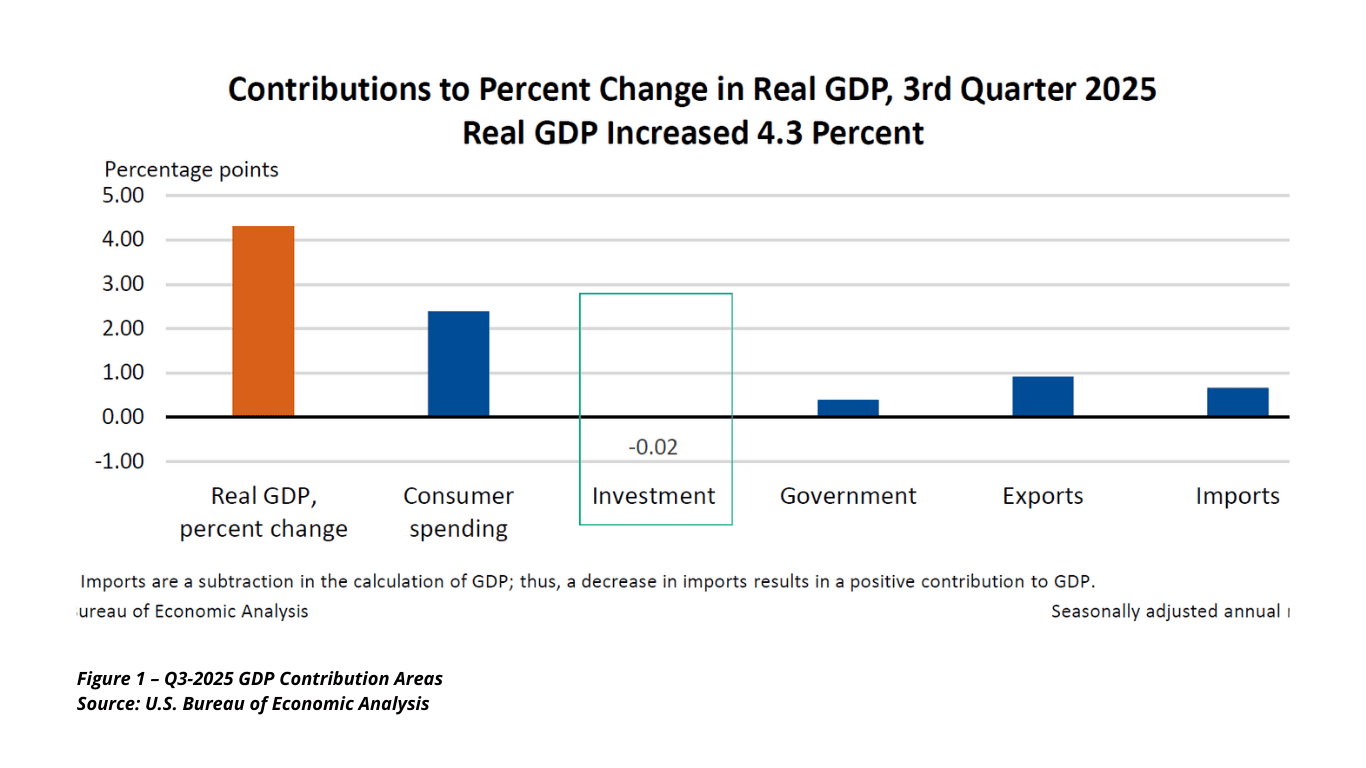
The latest U.S. GDP results point to a strengthening economic backdrop. Q3 2025 delivered a 4.3% annualized growth rate, materially exceeding the 3.3% consensus forecast. Growth was supported by resilient consumer spending, stronger exports, and a decline in imports which contributed positively to net GDP and sustained government spending. Inflation averaged 2.7% to 3.0% throughout 2025 and is expected to continue in 2026 as well as unemployment at 4.3% which is predicted to increase throughout this year.
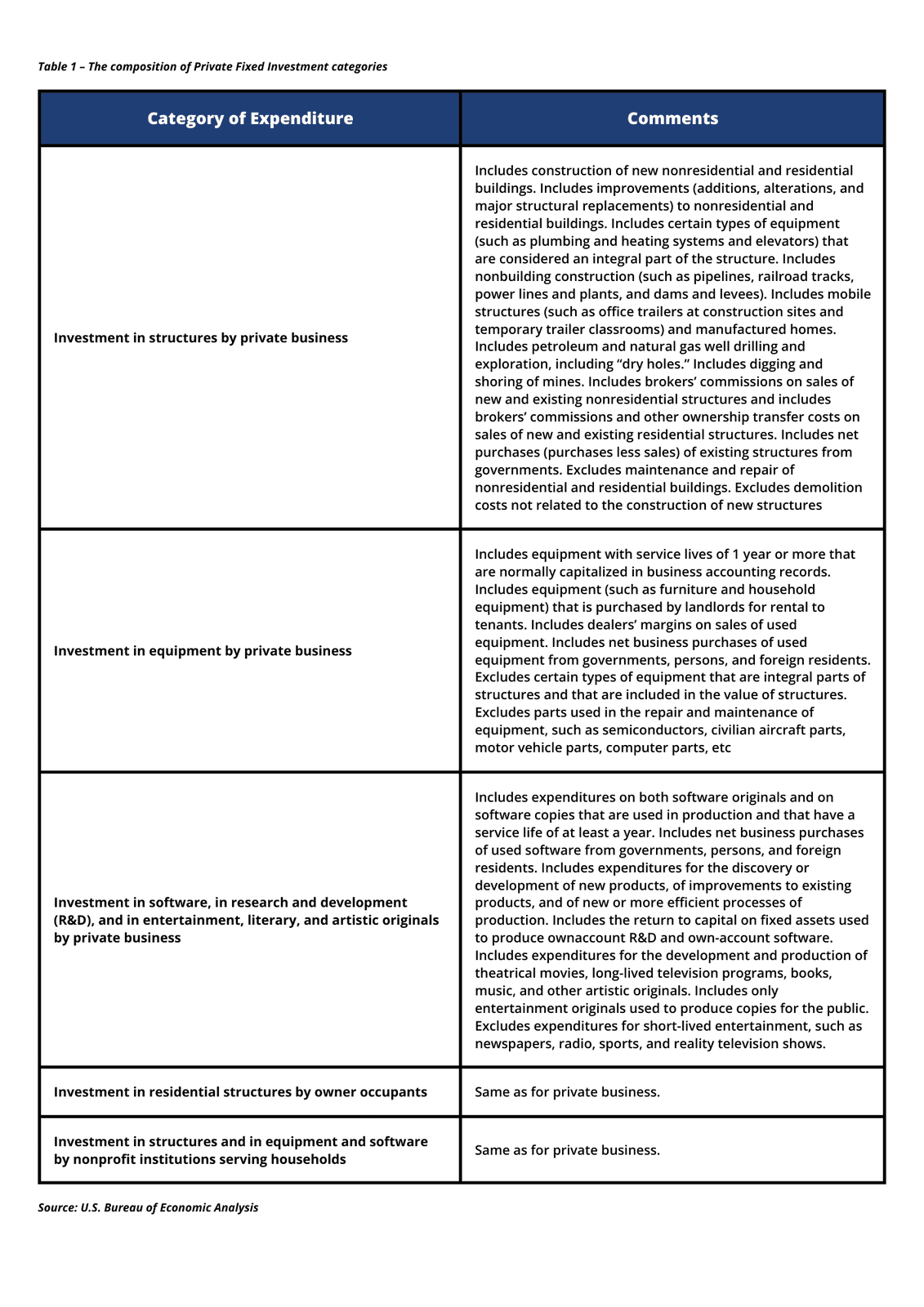
Less visible, but arguably more instructive, is the performance of Investment (Figure 1), specifically Private Fixed Investment (PFI). PFI represents spending by private businesses, nonprofits, and households on long-lived assets such as structures, mechanical and production equipment, software, and intellectual property (Table 1). In effect, it serves as a barometer of confidence in future economic activity and a leading indicator of how organizations are positioning themselves for the next phase of the business cycle.
Unlike consumption, which reflects present demand, PFI reflects intent, the willingness to commit capital today in anticipation of tomorrow’s returns. When PFI accelerates, it signals not just optimism, but confidence and preparation.
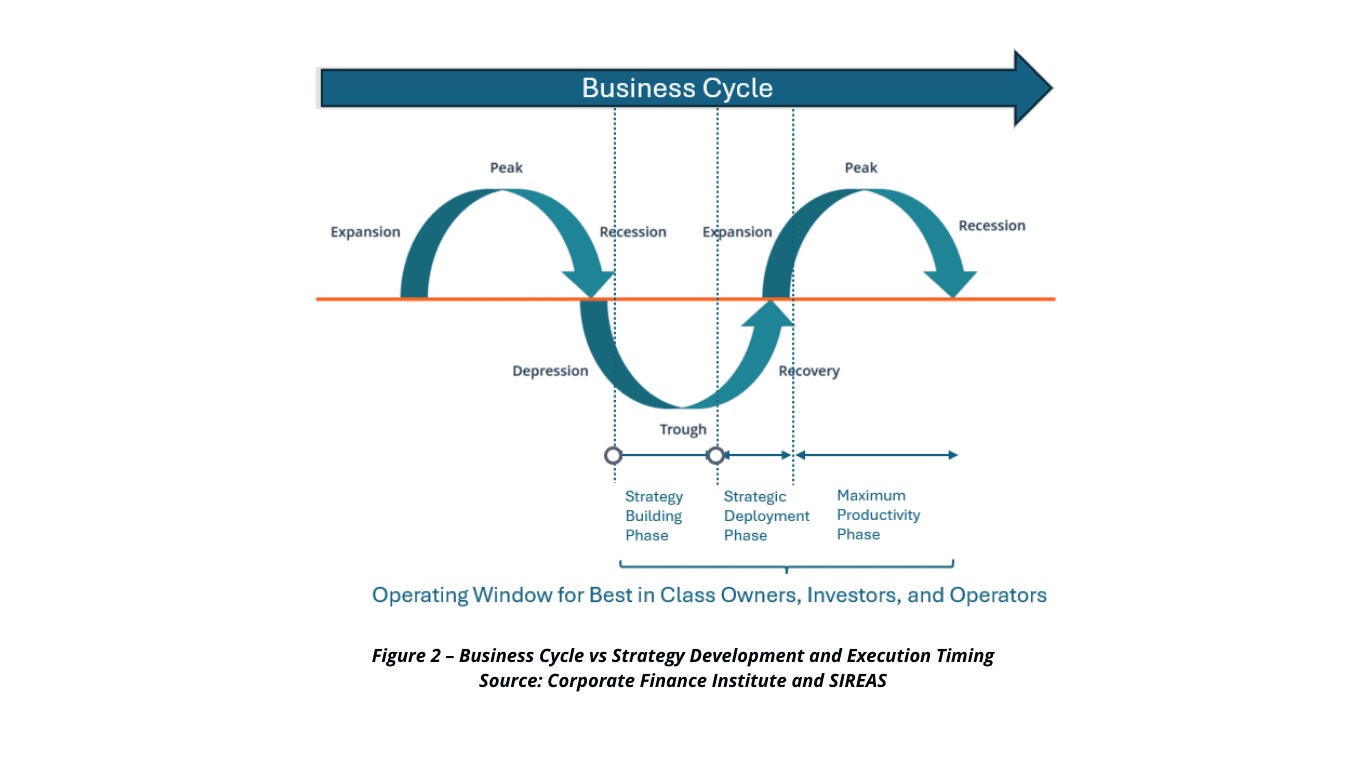
A useful benchmark for how organizations can translate that intent into durable advantage is Texas Instruments (TI). TI operates a globally distributed portfolio of mission-critical manufacturing facilities, offices, and logistics centers across multiple industrial and commercial end markets. What differentiates TI is not simply scale, but how deliberately its commercial and operating strategies are designed to maximize returns across the full economic cycle. TI’s operating model is explicitly forward-leaning (Figure 2). Rather than reacting to economic tailwinds once they arrive, the company develops business and operational strategies in advance-aligning capital investment, facility strategy, and operating capacity ahead of demand inflection points. This approach allows TI to capture outsized value as markets expand, while benefiting from greater flexibility in labor availability, material costs, and risk tolerance during periods of transition.
The result is not just resilience, but productivity. By designing operating models that anticipate growth rather than chase it, organizations can convert volatility into advantage and capital investment into sustained performance and real growth.
Today, multiple market signals suggest continued positive GDP momentum into Q4 and early 2026. The commercial real estate market appears to be approaching an inflection point. For owners, investors, and operators, particularly those managing distributed real estate portfolios, the timing is critical.
What To Do Now
This is the moment to move beyond incremental optimization and toward intentional operating model design. Forward-thinking organizations will focus on how facilities, asset management, operations, and technology integrate as a single system-one built to scale, adapt, and translate strategic intent into operational change and measurable outcomes.
Organizations that act now will be positioned not merely to participate in the next cycle but will unlock its full potential, secure leadership and outsized returns.
SIREAS offers owner focused and value-oriented services that keep clients ahead of the curve. For owners looking to translate this moment into an operating advantage, please reach out to our Sales and Solutions team! (Neal Sivie, sivie@sireas.com; Maureen Ehrenberg, ehrenberg@sireas.com).