Introduction
As AI becomes embedded in the core of corporate real estate operations, the next challenge is no longer adoption-it’s about advancement. The new frontier for CRE and facilities professionals lies in moving beyond table stakes, where AI tools merely optimize existing workflows, toward a strategic nexus where real estate, technology, and data converge.
In this emerging phase, buildings will no longer simply respond to user needs, they will anticipate them. Data-driven insights will inform not just operations, but organizational strategy: how portfolios are sized, how resources need to be focused, and how corporate environments contribute to their value chain.
The future of corporate real estate is not just smarter buildings, but intelligent ecosystems that are adaptive, connected, and continuously learning. In this final part of the series, we’ll explore what it means to move beyond the AI baseline, how leading organizations are already redefining their operating models, and why the next era of real estate will be measured by its ability to think, respond, and evolve alongside the business itself.
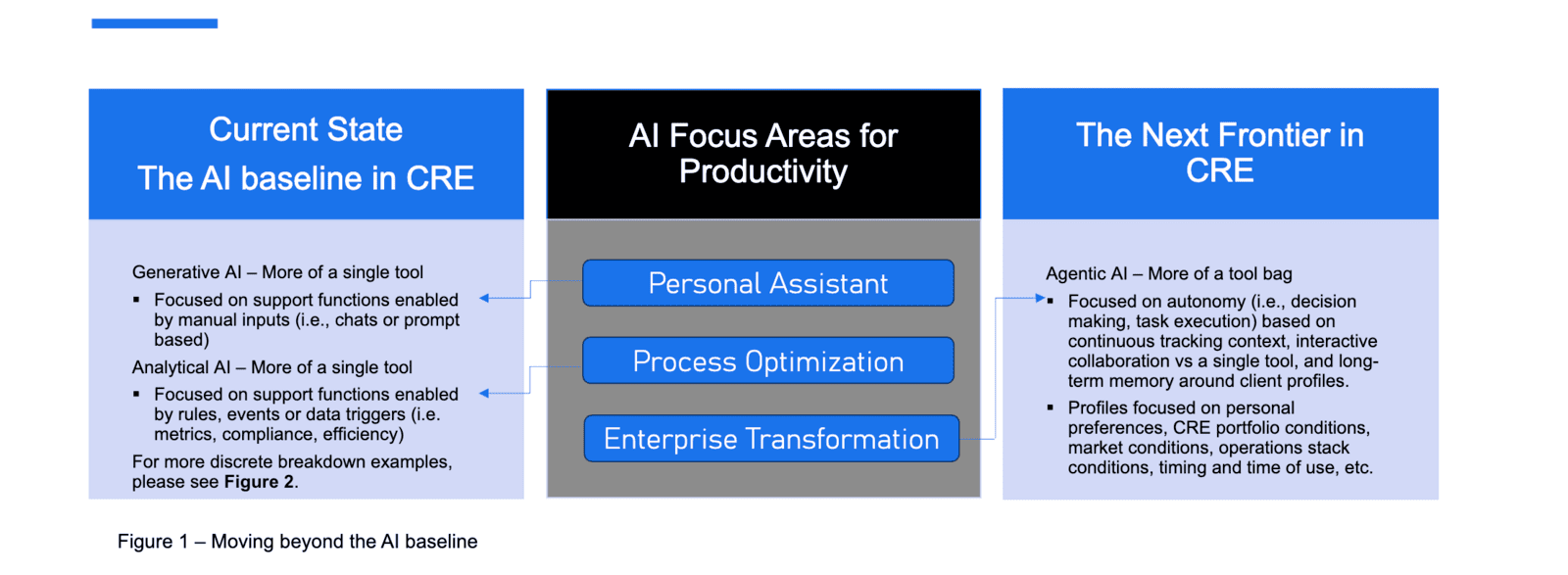
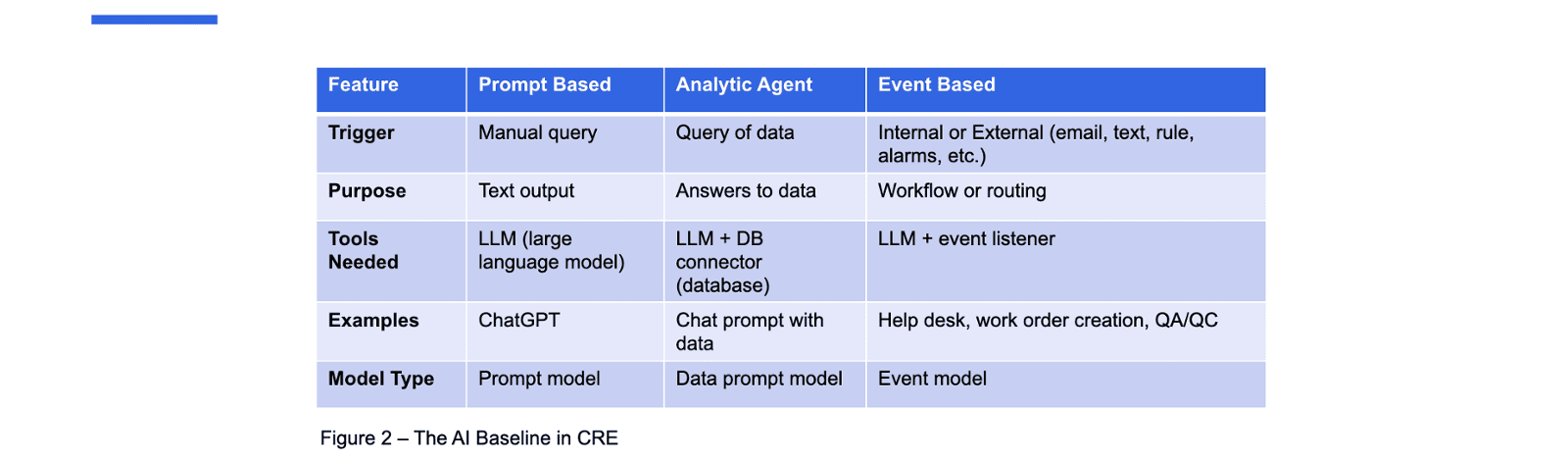
Leading organizations can move beyond the AI baseline toward a more intelligent, connected, and adaptive future. It’s about focusing on the Operations Stack – not just the Digital Stack and the tools within this area. To move beyond the current table stakes of AI we know today, it’s important to clarify an understanding of the baseline and what Figure 1).
The frontier is an aggregated ecosystem, agile, and flexible. As the business and operational models change over time or circumstance, technology and embedded intelligence should be able to adapt to change management.
The paradox for technology in CRE is attempting to strike a balance between the adoption of innovation and technology without disrupting an organization’s operations or their current business models. What might at first seem more efficient and simplified can potentially result in something more complex and not widely accepted.
In the current environment and historically speaking, clients and service providers focused on single point tech solutions, subscription services, and a push to move from single point services to bundled value propositions like IWMS.
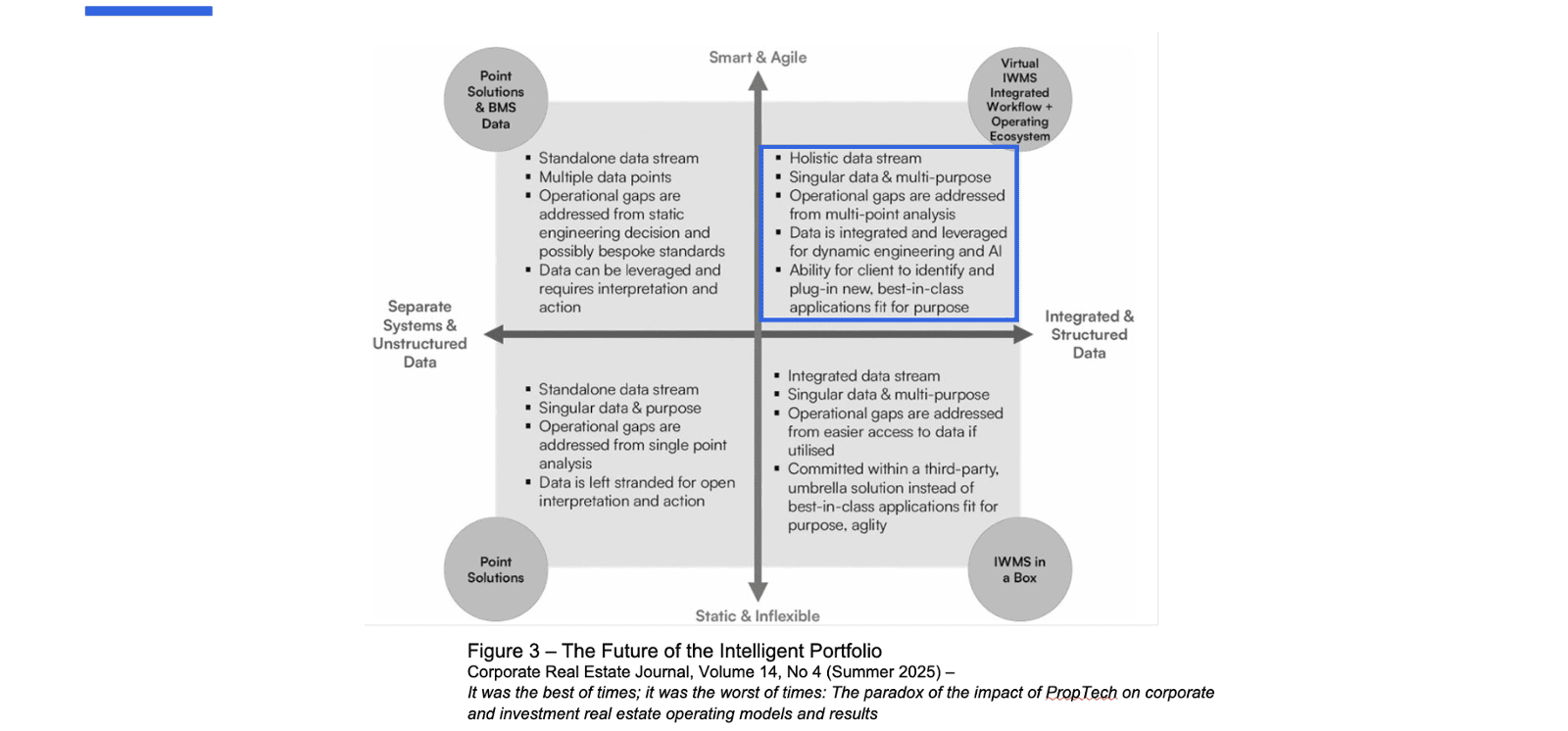
The future of agentic AI enables clients the ability to convert historical single points solutions into an aggregated model, a “Virtual IWMS” (see Figure 3) and an operations stack that facilitates best in class digital stack changes and interchange with operating and business model changes. The future nexus enables this level of agility and strengthens the value proposition by allowing previously stranded capital investments and past decisions to be repurposed and leveraged across operations. This in turn, supports a more resilient and adaptive corporate real estate strategy.
The paradox for technology in CRE is attempting to strike a balance between the adoption of innovation and technology without disrupting an organization’s operations or their current business models. What might at first seem more efficient and simplified can potentially result in something more complex and not widely accepted.
In the current environment and historically speaking, clients and service providers focused on single point tech solutions, subscription services, and a push to move from single point services to bundled value propositions like IWMS.
The future of agentic AI enables clients the ability to convert historical single points solutions into an aggregated model, a “Virtual IWMS” (see Figure 3) and an operations stack that facilitates best in class digital stack changes and interchange with operating and business model changes. The future nexus enables this level of agility and strengthens the value proposition by allowing previously stranded capital investments and past decisions to be repurposed and leveraged across operations. This in turn, supports a more resilient and adaptive corporate real estate strategy.